

Your 2026 Financial Guide
First-Time Homebuyer Loans and Programs
Purchasing your very first property is an incredible milestone, but the upfront cost of entry can feel intimidating.
In 2026, surging market valuations have made saving for a traditional 20% down payment impractical for many U.S. households.
Fortunately, federal housing agencies and major national banking institutions have expanded first-time homebuyer programs to bridge the affordability gap.
By utilizing specialized 0% to 3% down payment mortgages and hidden lender grants, you can transition from renting to owning much sooner than you think.
National Low Down Payment Loan Options
The U.S. mortgage framework offers four primary low-down-payment pathways designed explicitly for first-time buyers:
- Fannie Mae Standard 97% LTV: A conventional loan requiring just a 3% down payment. Unlike income-restricted programs, this standard option has zero income limits, making it perfect for high-earning professionals with limited cash reserves.
- FHA Loans: Backed by the Department of Housing and Urban Development, FHA loans require a 3.5% down payment and maintain highly flexible credit underwriting rules.
- VA Loans: Provided by the Department of Veterans Affairs, this program offers 0% down financing with zero monthly mortgage insurance for qualified military service members and veterans.
- USDA Loans: Backed by the Department of Agriculture, this 0% down program assists low-to-moderate-income families buying homes in designated rural communities.
Unsure how your credit profile matches these program limits? Review our comprehensive blueprint on how to qualify for a home loan.
Specialized 2026 Affordable Housing Programs
If your household income falls within low-to-moderate parameters, you can tap into specialized conventional variants that offer deeper discounts:
|
Program Name |
Minimum Down Payment |
Income Restrictive Cap |
Key Structural Advantage |
|
Fannie Mae HomeReady® |
3% upfront |
Max 80% of Area Median Income |
Up to $2,500 direct closing cost credit. |
|
Freddie Mac Home Possible® |
3% upfront |
Max 80% of Area Median Income |
Capped administrative lender fees. |
The Fannie Mae HomeReady® framework is particularly lucrative; eligible very low-income buyers automatically receive a $2,500 down payment or closing cost credit that never requires repayment.
You can read the official parameters directly on the Fannie Mae Single-Family Housing Dashboard.
To find specific national institutions participating in these grants, browse our updated rankings of the best mortgage lenders in the U.S..

Leveraging Local Down Payment Assistance (DPA) Grants
Beyond national loan types, there are over 2,600 localized down payment assistance programs operating across the United States.
These state and municipal Housing Finance Agencies (HFAs) provide secondary funding structures, including:
- Forgivable Second Mortgages: Zero-interest second loans that are completely wiped away if you remain in the home for a set duration (typically 5 to 10 years).
- Deferred-Payment Loans: Secondary lines of credit that require zero monthly payments, with the balance only coming due when you sell or refinance the home.
- Direct Home Grants: Cash gifts provided by local non-profits or municipalities that cover your out-of-pocket closing costs instantly.
According to the first-time buyer assistance toolkits maintained by the U.S. Department of Housing and Urban Development (HUD), you are considered a “first-time buyer” if you have not held a primary real estate title at any point during the last three consecutive years.
The Mandatory Homebuyer Education Course
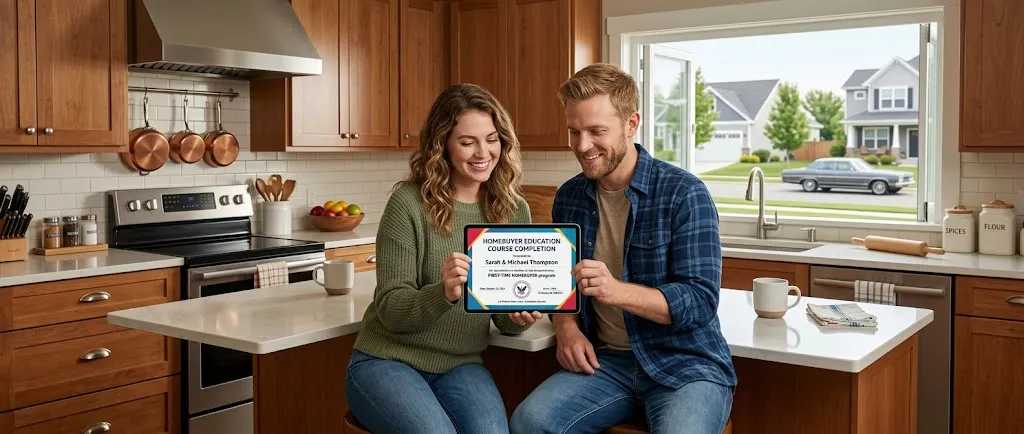
If you choose a 97% LTV conventional program where all occupying borrowers are first-time buyers, federal regulations require you to complete an approved homeownership education course before closing.
These digital courses—such as Fannie Mae’s HomeView®—take roughly 4 to 6 hours to finish online. They teach you the mechanics of escrow accounts, property maintenance budgeting, and title insurance to ensure long-term homeownership stability.
If you prefer face-to-face assistance over national online portals, consult our guide on mortgage loans near me – how to compare local lenders.
FAQ – Frequently Asked Questions
First-Time Buyer Financed Basics
How much down payment do I really need as a first-time homebuyer?
While 20% eliminates private mortgage insurance (PMI), you can secure a conventional loan with just 3% down, or an FHA loan with 3.5% down.
Can a down payment be completely gifted?
Yes. Standard conventional and FHA guidelines allow 100% of your initial down payment and closing costs to be funded via a documented cash gift from a relative or approved non-profit.
What credit score do I need for first-time buyer programs?
FHA allows approvals at a 580 score with a 3.5% down payment, while conventional low-down-payment options require a minimum 620 FICO tier.
Navigating the real estate market using specialized first-time homebuyer programs is the smartest way to minimize your initial out-of-pocket expenses.
By combining a 3% down conventional loan with localized DPA grants and completing your online homebuyer education, you can confidently secure a reliable mortgage that protects your monthly cash flow and establishes long-term household equity.
Disclaimer: Short-term loans carry high interest rates. Ensure you have a repayment plan before committing to any financial agreement.
More Loans Education Posts
Need Funds? Let’s Get A Loan Online.
Apply online today with Snap Loans Cash and get connected to trusted lenders within minutes.
Fast. Simple. Secure.